

Domate is PomoDomate's virtual companion, built around a simple idea: meaningful habits grow one small step at a time. This guide explains Domate's five evolution stages—seed, sprout, baby, young, and adult—and how Pomodoros, improve your focus sessions, levels, streaks, and consistency turn daily effort into visible progress.
What is Domate?
Domate is the virtual pet inside PomoDomate. It is more than a decorative character: it represents the progress you build while studying, working, and completing Pomodoro technique sessions. Experience, levels, coins, and streaks turn your activity into numbers; Domate turns that progress into a story you can see.
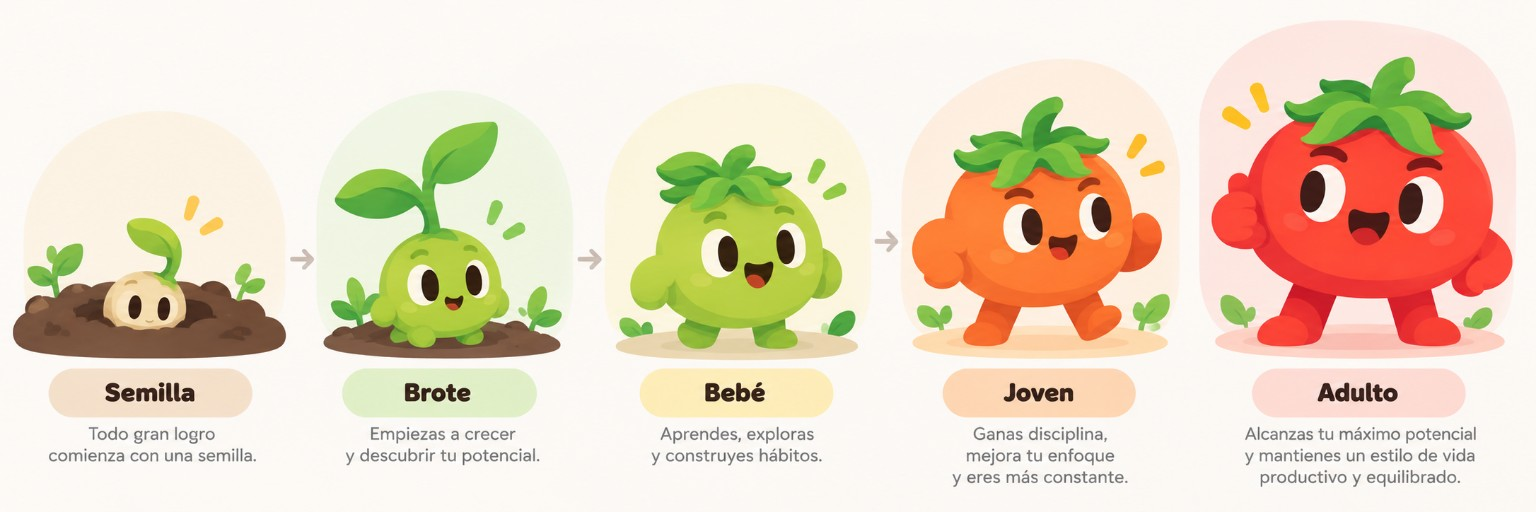
Domate's evolution is a reminder that sustainable productivity does not appear overnight. A habit starts small, needs attention, and becomes stronger through repetition. The stages follow a natural metaphor: a seed becomes a sprout, then a learning baby, a disciplined young companion, and finally a mature adult.
If you are new to the app, start with our guide to what PomoDomate is and how its features work, then learn how to use the Pomodoro timer.
The five Domate evolution stages
1. Seed: every habit starts with an intention
The seed represents the beginning. You may not have a long streak or a perfect routine yet, but you have made a decision to protect time for something important. That might mean studying for an exam, starting a project, reading, coding, writing, or learning how to focus.
The seed stage shows that you do not need to feel completely ready. One small Pomodoro can be enough to begin building a habit.
2. Sprout: you start to grow
The sprout represents the first signs of consistency. You have completed sessions, tried the timer, and started discovering which schedules, durations, and environments help you focus. Some days may still be irregular, but the habit is beginning to take root.
At this stage, prioritize repetition over intensity. Completing realistic sessions several times is more useful than forcing an extreme workday and abandoning the routine afterward.
3. Baby: learning and building habits
The baby stage represents learning and exploration. You understand the timer and taking breaks better, and you can begin using tasks, statistics, and customized sessions to learn what works for you.
Growth also means experimenting. Not everyone needs 25-minute sessions, the same schedule, or the same visual theme. Trying, reviewing, and adjusting are part of the process.
4. Young: building discipline and improving focus
Young Domate represents a more stable routine. You have learned to start tasks with less resistance, protect focus blocks, and use breaks before fatigue becomes overwhelming. Discipline does not mean working nonstop; it means returning with intention and protecting your rhythm.
Planning becomes more important at this stage. You can break large projects into smaller tasks and connect every focus session to a concrete result.
5. Adult: reaching your potential with balance
The adult stage represents maturity and balance. It does not mean that you never get distracted or that every day is perfect. It means you have a system that can adapt: you know when to focus, when to rest, when to change the goal, and when to stop.
An adult Domate represents sustainable productivity. The goal is not to accumulate unlimited hours, but to use your energy intentionally while protecting your health and long-term goals.
How does Domate evolve?
Domate's evolution is connected to progress inside PomoDomate. Completed sessions, experience, levels, streaks, and other gamification elements help represent the path you are building. The exact rules may depend on the current version and active features, but the main idea remains the same: consistency feeds progress.
Domate is not designed to demand endless work. Its purpose is to make small efforts visible. A single focus session may feel small, but many sustainable sessions can change how you study, work, and organize projects.
Domate levels and productivity gamification
Domate is part of PomoDomate's productivity gamification system. Levels, experience, coins, and streaks represent different aspects of your activity. They are not an absolute measure of your value and do not have to become a competition. They are signals that can help you recognize the effort you have made.
Read our guide on how PomoDomate uses gamification to support motivation to understand how a focus block can create visible progress even when the final goal is still far away.
How to help Domate grow
- Choose a clear task before starting the timer.
- Complete sessions that match your actual energy.
- Respect short and long breaks.
- Review statistics without turning them into pressure.
- Return to the habit after an irregular day.
- Use planning to break large goals into smaller actions.
Frequently asked questions about Domate evolution
How many Domate evolution stages are there?
The visual evolution shown in PomoDomate includes five stages: seed, sprout, baby, young, and adult. Each stage represents a different moment in the growth of a habit.
Does Domate grow if I do not complete sessions every day?
Consistency does not mean perfection. Rest days and necessary pauses are part of a healthy routine. The important thing is to return to the system and keep a sustainable rhythm.
Is Domate evolution only decorative?
Domate has a visual and motivational role. It represents progress inside the gamified experience and turns abstract data into a story of growth.
Conclusion
Domate's evolution represents the path from a small intention to a mature productivity routine. Seed, sprout, baby, young, and adult remind you that every Pomodoro can count when it belongs to a balanced system. You do not need to change everything in one day: start with one session and let the habit grow.

