


When you feel overwhelmed, procrastination is often a response to an unclear or threatening task, not proof that you are lazy. The way forward is to reduce uncertainty, choose a small next action, and build evidence that starting is safe and possible.
1. Name what feels overwhelming
Write the task and the specific source of resistance. Are the instructions unclear? Is the deadline close? Are you worried the result will not be good enough? Do you lack a required piece of information? Each problem needs a different next step.
If the task is actually several tasks, list them. “Finish the project” may include finding sources, choosing a structure, drafting, revising, and submitting. Seeing the parts reduces the pressure of treating everything as one impossible action.
2. Choose the smallest useful next action
Pick an action that can be completed in five to fifteen minutes: open the instructions, create the document, write three questions, gather two sources, or solve the first example. The action should move the work forward, not merely create a prettier task list.
Set a stopping point before you begin. A small boundary makes starting less threatening and gives you a chance to reassess with new information.
3. Start with a short focus session
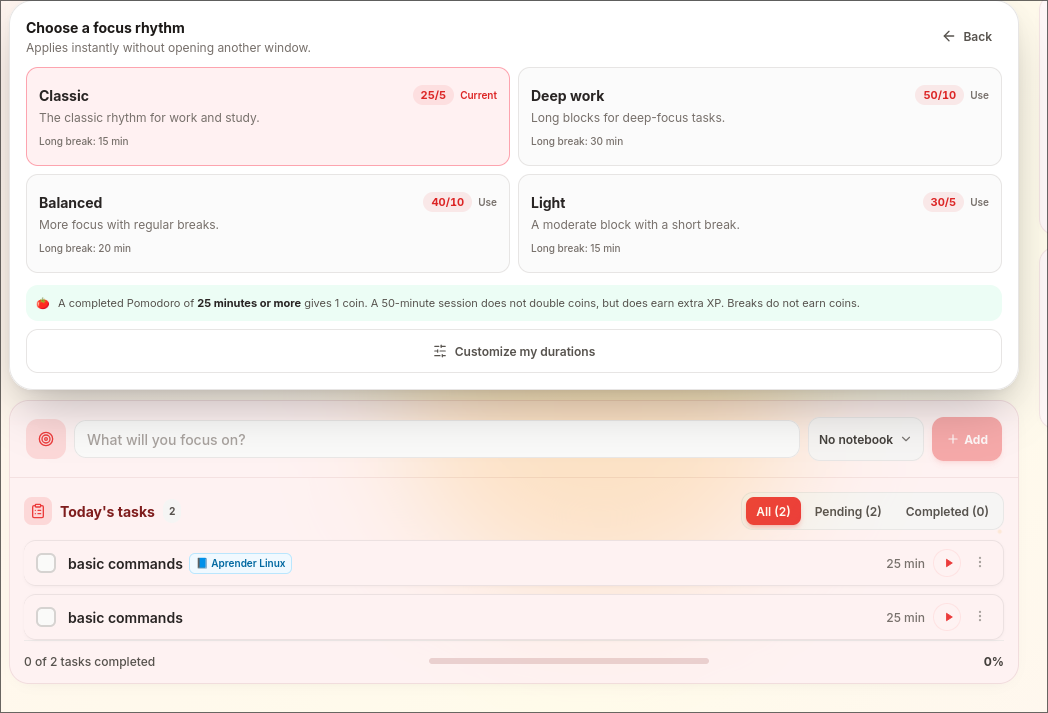
Use a short Pomodoro session or a five-minute commitment. Put the phone away, open only the necessary materials, and work on the next action until the timer ends. Momentum may continue, but it does not have to.
When anxiety rises, slow down and describe the next physical action: “I am opening the assignment brief” or “I am writing the first imperfect sentence.” This keeps attention with the work instead of the entire imagined future.
4. Continue by choosing, not by reacting
At the end of the session, write what changed and what comes next. Decide whether to take a break, schedule another interval, ask a question, or stop for the day. A deliberate stop is different from abandoning the task in confusion.
Do not punish an overdue task by filling every remaining hour. Rebuild a realistic plan, communicate when a deadline is at risk, and protect sleep. Sustainable progress is more reliable than an emergency cycle of avoidance and exhaustion.
A five-minute anti-overwhelm reset
- Write the task in one sentence.
- List the parts that make it feel large.
- Choose one useful action that takes less than fifteen minutes.
- Set a short timer and remove one distraction.
- Record the next action before stopping.
Frequently asked questions
What if I still cannot start?
Make the action smaller or clarify the missing information. If the task involves anxiety, perfectionism, or persistent low mood, consider speaking with a qualified professional or someone you trust rather than treating it as a simple time-management problem.
Should I wait until I feel motivated?
No. Motivation often follows a small amount of visible progress. Start with a defined commitment that is easy enough to attempt, then decide what is reasonable after the first step.
How do I avoid getting overwhelmed again?
Capture tasks early, divide projects into next actions, review deadlines weekly, and leave capacity for unexpected work. The goal is not to eliminate every difficult day but to recover before the backlog becomes invisible.