

Build a daily reading habit around a specific opportunity, a book you have already chosen, and a small session you can begin. A reminder is more useful when it leads to an easy next step: sit in your reading spot, open the bookmarked page, and start.
Your goal might be enjoying a novel after dinner or staying current with assigned reading. Those goals call for different kinds of attention. This guide helps you choose a manageable starting point, save your place, and recover when a session does not happen.
1. Decide what kind of reading you want to do
Reading a novel after dinner and studying a dense textbook have different goals. For leisure reading, you might want a pleasant way to unwind. For a course, you may need to understand an argument, prepare questions, or work through examples.
Choose one book or reading assignment as your default. Keeping a large “to be read” list is fine, but selecting a book should not become a decision you have to make every evening. Put the current book somewhere you can find it when the session begins.
Write a small goal such as “read for ten minutes after dinner.” Use ten minutes as a starting point you can adjust after a few sessions. If the book is challenging or your day is crowded, a shorter session can be enough to keep the next step approachable.
2. Attach the session to a dependable opportunity
“Read more” does not identify when reading will happen. “After I clear the dinner dishes, I will read on the couch” gives the activity a recognizable place in the evening. If dinner times vary, choose a different opportunity that better fits your life.
- Before work: read after breakfast, before opening your work messages.
- During the day: use part of a lunch break when you have a suitable place to sit.
- After class: read in the library before the commute home.
- In the evening: read after a routine household task.
An optional phone reminder can support the cue. Name the activity specifically, such as “Read the next section of my history book,” rather than “Be productive.” Use a reminder tool you already have; automatic reminders and receiving them while an app is closed depend on the tool and your device settings.
3. Remove the setup work from the session
Leave a bookmark at the stopping point. If you read digitally, keep a note of the chapter or section so you do not spend the opening minutes searching. Put unrelated tabs or notifications aside when practical.
Choose a minimum version for crowded days. That might be reading one paragraph and Pomodoro for writing the page where you will resume. The minimum is an option for staying connected to the book, not a rule that replaces the longer sessions your coursework may require.
4. Give the session a beginning and a stopping point
A timer can create a clear opening: choose the book, decide what you want from the session, and start. You can use a short interval or a 25-minute reading session when you have more time. If the timer adds pressure to leisure reading, use a chapter or a natural stopping point instead.
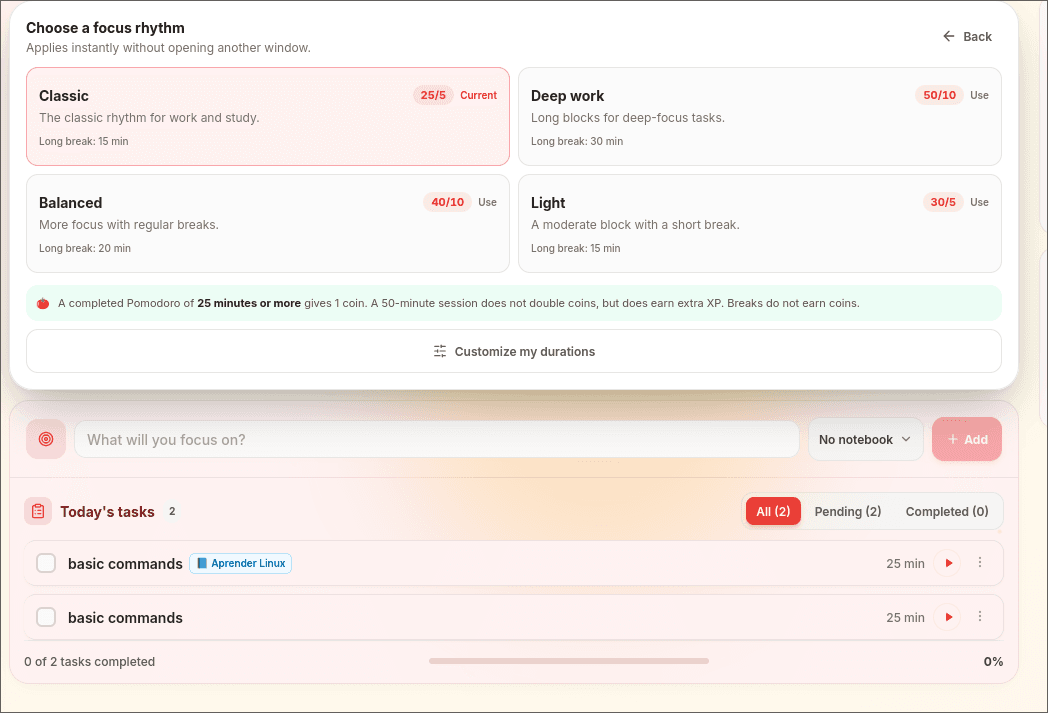
Pomodomate's focus timer can provide the work-and-break structure. Choose the duration that fits your available time. The countdown measures time spent; it does not tell you whether you understood the material or finished the reading you intended.
For assigned reading, Cornell's reading guidance organizes the process around identifying a purpose, previewing the material, and planning how you will use it before reading. Turn that into a session question, such as “What evidence does the author use for the main claim?”
5. Leave a short note for the next session
You do not need to summarize every page. A small restart note makes the next session easier to enter and gives you a place to collect questions. Use paper, your existing notes app, or a Pomodomate notebook.
Book: the title I am reading
Where I stopped: chapter 4, section on public transportation
One idea: the author connects commute length with access to jobs
Question: does the example apply to smaller cities?
Next session: read the comparison in the following section
Adapt this sample to the detail you need. A restart note can be much shorter. For a novel, “Chapter 6; the characters have just arrived at the house” may be all you need.
If you want to track consistency, record whether you did the session you intended. Keep reading progress and elapsed time separate: spending ten minutes with a difficult passage can be worthwhile even if you do not advance many pages.
6. Restart without creating a reading debt
If you miss Tuesday, you do not automatically owe yourself twice as much reading Wednesday. Return to the next available session and your saved stopping point. If missed sessions keep happening, change the opportunity, reduce the setup, or choose a more suitable book.
Some schedules work better with reading on selected days than every day. Three dependable sessions can be a more useful starting arrangement than seven sessions you rarely manage. A daily habit is one possible format, not the only way to read regularly.
For required reading with a deadline, account for unfinished material in your actual study plan. Reducing guilt does not change the due date. The study schedule for students who work part-time shows how to make room around other commitments.
Try three sessions before redesigning the whole routine
For a simple trial, choose one book and three upcoming opportunities. You might read for ten minutes after dinner on Monday, Wednesday, and Friday. This is a way to test the setup before deciding whether a daily schedule suits you.
After each attempt, record one line about what made starting easy or difficult. “The book was already beside the couch” suggests a setup worth keeping. “Dinner ended just before a call” suggests changing the opportunity. “I spent the whole time choosing a book” suggests choosing the next reading in advance.
- You lose your place: leave a bookmark and a short restart note.
- You keep postponing the alert: move the session to a time when reading is possible.
- You rush to hit a page target: try a time boundary or a section goal that better matches the material.
- You cannot explain an assigned passage: turn the next session into a question about that passage rather than simply advancing more pages.
After the trial, keep one thing that worked and change one source of friction. You will have a specific adjustment to test instead of a vague promise to become a better reader.
Frequently asked questions
How many pages should I read each day?
There is no single target for every book and reader. Page length, difficulty, and your purpose vary. Start with a manageable session and use your experience to estimate the time needed for a reading deadline.
Can timed sessions help with reading?
Yes, if timed sessions help you begin and take taking breaks. Choose a suitable interval, then check what you read or understood afterward. A Pomodoro technique is a structure for the session, not a reading-comprehension test.
What should I do if I keep ignoring reading reminders?
Check the situation in which the alert arrives. If you are usually commuting, cooking, or on a call, move it to a better opportunity. Choose the book and leave it ready beforehand. Try the revised setup for a few sessions and note what still makes starting difficult.