

A Pomodoro timer can turn studying into a sequence of manageable attempts: choose one task, work with fewer interruptions, take a break, and decide what to do next. The technique is flexible enough for reading, problem solving, writing, and exam review.
1. Set up one study objective
Choose an outcome before starting the timer. You might read and explain one section, solve twelve exercises, draft an introduction, or recall a chapter without notes. A timer measures a session; it does not choose the work for you.
Gather the book, notes, calculator, and any approved references. Put unrelated notifications away. Keep a small note nearby for distractions or questions you will handle later.
2. Choose an interval that fits the work
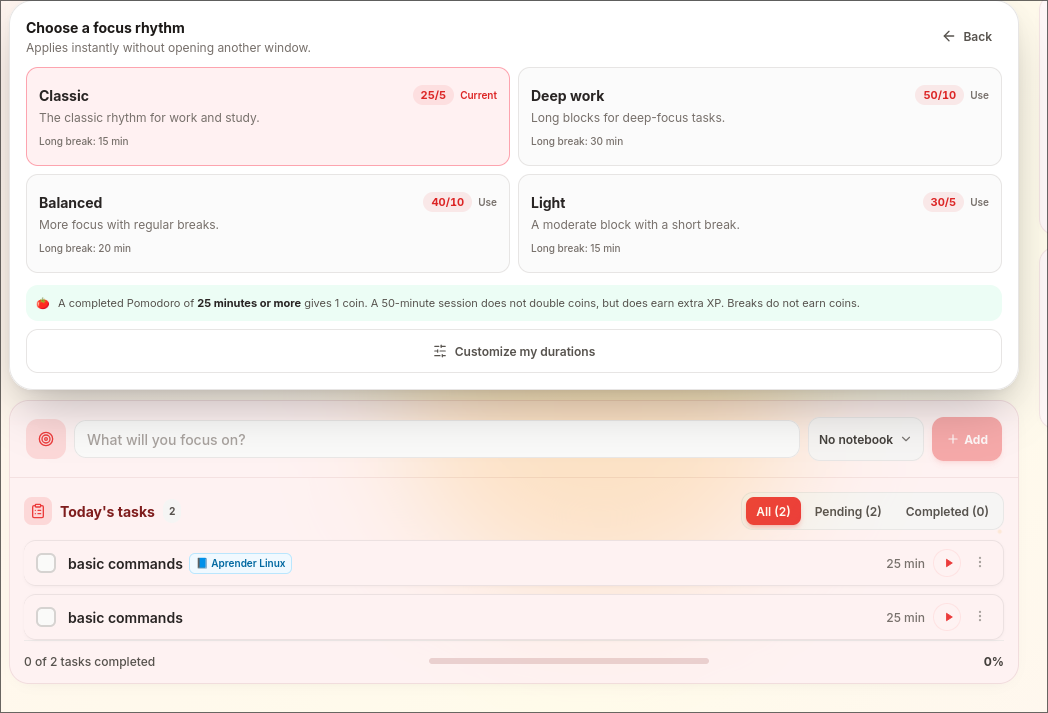
Start with 25 minutes of focus and a five-minute break if you are building the habit. A 45-minute focus period may suit a longer problem set, while a 15-minute interval can help you begin when the task feels intimidating.
Do not treat the interval as a challenge to ignore fatigue. Stop at a sensible point, take the break, and return with a clear next step. Forcing a tired session often creates more errors and less useful learning.
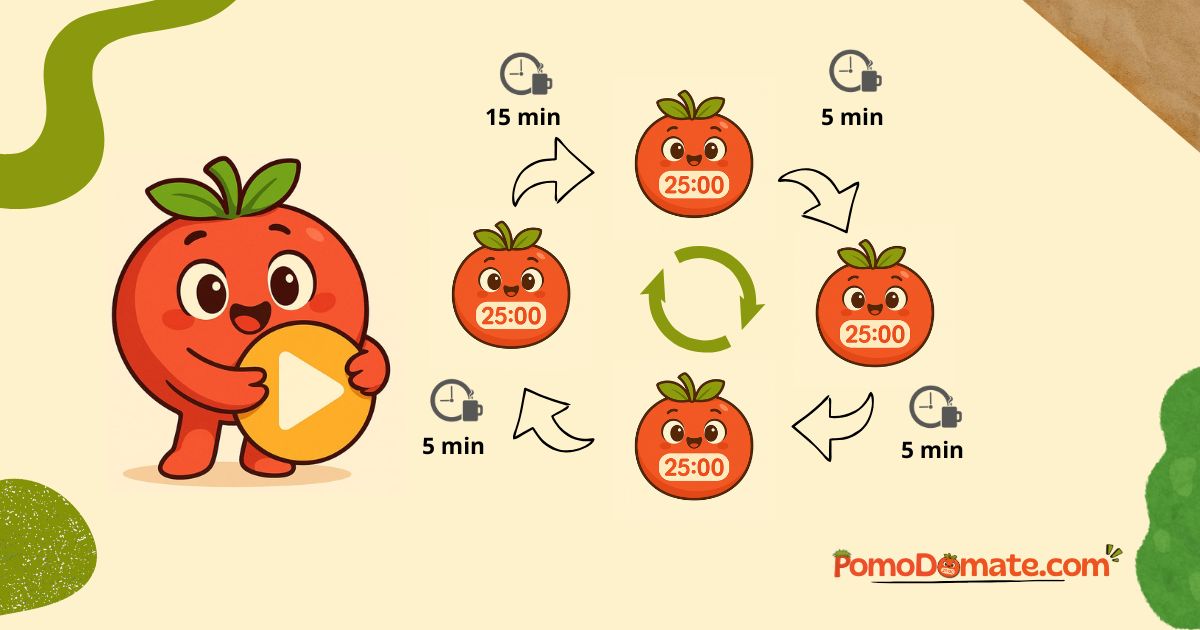
3. Use the complete Pomodoro cycle
- Choose one concrete study task.
- Focus until the timer ends or you reach a natural stopping point.
- Take a short break away from the problem.
- After several focus intervals, take a longer break.
- Record what you completed and what needs another attempt.
Use the break to stand, drink water, breathe, or look away from the screen. Avoid replacing a study distraction with an endless stream of notifications.
4. Adapt Pomodoro for different subjects
| Task | Focus activity | Break note |
|---|---|---|
| Reading | Read one section and write a short recall summary | Record unclear terms for later |
| Mathematics | Solve problems without checking the answer too early | Mark the exact step that caused difficulty |
| Writing | Draft or revise one defined section | Leave a note for the next paragraph |
| Exam review | Answer mixed questions from memory | Separate knowledge gaps from careless errors |
Frequently asked questions
Can I use Pomodoro for a two-hour study block?
Yes. Treat it as several focused intervals with real breaks. The goal is not to work continuously for two hours; it is to protect repeated attempts and keep your energy usable.
Should I stop in the middle of a problem?
You can stop at the timer or finish a small logical step. Write where you stopped and the next action so restarting does not require reconstructing your context.
What if the timer makes me anxious?
Use it as a gentle boundary rather than a performance test. Start with a short interval, mute progress notifications if needed, and measure completed learning actions instead of comparing the number of sessions with someone else.